Why Forex Trading Is Appealing to South Korea’s High-Earning Tech Workforce

Tech talent diving into forex trading trends.
Many professionals in South Korea are highly-paid individuals with well-developed cognitive abilities, better digital community, and increasingly interested in investment activities beyond ordinary means. With this population group entering their economically active life, many of them choose to focus on forex trading which impresses them with its availability, strategic sophistication, and opportunity to actively interact with the financial markets of the world.
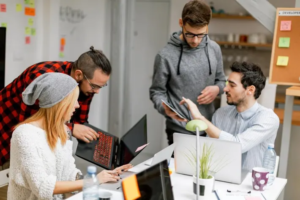
The South Korean tech industry has a reputation of having a challenging working area and task-oriented culture. The software engineers, data analysts and IT experts are used to a high-paced decision making process and the interpretation of complex data when pressured. All these qualities are very suitable to the vibrant format of a currency trade in which the market situation changes very fast and strategy matters. Forex platforms offering live data, real-time analytics, and custom-made tools will feel natural to technical users and will easily fit into the trading universe.
The forex trading business is also flexible and this appeals to the technical professionals. Quite a lot of the industry is operating odd hours, hybrid work options, or project-based work that gives pockets of free time throughout the day. Their irregular schedules align well with the fact that the forex market runs 24 hours a day (Monday through Friday). They can then be able to research, analyze and perform trade at their own convenience, without affecting their primary method of income.
The other reason why it becomes more interesting is the attractiveness of diversification. Employees in South Korean technology industries are usually well-paid and they wish to invest prudently. Whereas others consider investing in cryptocurrency or real estate, forex trading is a worldwide connected opportunity that one can only scale up progressively. Instead of committing to long-term investments that may underperform, traders have an opportunity to test the water with small amounts and build their strategies with time.
This trend is also due to a culture of lifelong learning that is entrenched within the tech scenario of South Korea. Tech experts are accustomed to constantly updating their skills using coding boot camps, certifications, online learning, and training. The same mentality is used in trading. The accessibility of educational resources, demo accounts and simulation tools gives them the leverage of gaining competence in forex trading at their own pace. The learning curve does not put them off, and in fact, it can be exciting to them.
Forex trading is a very risky activity but it is also a kind of a mental challenge that is appealing to those with high performance careers. South Korean tech employees do not hesitate to treat trading as a part-time job or interest that involves using other components of their cognitive arsenal. Analyzing the macroeconomic indicators, identifying the chart patterns and responding to the global news become less of a gamble and feel like applying logic under uncertainty: an area they have already trained to cope with.
Notably, these people are also well informed on digital security and risk control. Most of the tech community in South Korea values licensed brokers and encrypted networks. They are also technologically savvy and this allows them to consider potential risks, not be easily fooled by common scams and use data instead of feelings. This digital proficiency helps them have an advantage over others particularly in a trading platform where confidence in the platform is as important as market expertise.
Their expertise, rate of income, and their comfort with digital technology is allowing South Korea’s high-earning tech workforce to deem forex trading a solid platform to explore financial prospects. It not only means a prospect of returns but also the intellectual and strategic involvement they tend to resort to. As this group continues to grow, their preferences could shape the next phase of the retail forex culture in South Korea.